
You may find yourself uncertain about which skip size to choose for your project. Understanding the differences between mini skips and builder's skips can significantly affect your waste disposal experience. Mini skips are perfect for small domestic jobs, while builder's skips are designed for larger renovations, capable of handling a greater volume of waste. In this guide, you'll learn how to select the right size to suit your needs and make your waste removal process efficient and hassle-free.
Key Takeaways:
- Skip sizes range from mini skips suitable for small projects to builder's skips designed for larger construction waste.
- Choosing the correct skip size can optimise waste disposal and potentially reduce costs.
- Each skip size has specific volume capacities, influencing the type and amount of waste that can be disposed of efficiently.
What are Skip Sizes?
Skip sizes vary significantly, catering to different project needs, from small home renovations to large construction sites. They are typically measured in cubic yards or cubic metres, with common sizes ranging from 2-yard mini skips to 40-yard roll-on roll-off skips. Understanding these sizes helps you select the best option for your waste disposal requirements, ensuring efficiency and cost-effectiveness.
Definition of Skip Sizes
Skip sizes refer to the volume of waste each skip can hold, which impacts how much material you can dispose of in one go. A mini skip generally holds about 2 to 3 cubic yards, while larger options like builder's skips can hold up to 6 cubic yards or more. Each size is designed for specific waste types and volumes, making proper selection vital.
Importance of Choosing the Right Size
The right skip size can significantly affect the efficiency and cost of your waste disposal. A skip that is too small may lead to additional trips and costs, while an oversized skip can waste money and space. By assessing your project's needs and estimating the volume of waste accurately, you can ensure that your skip choice optimally aligns with your requirements.
Choosing appropriately sized skips not only enhances waste management efficiency but also minimises environmental impact. For instance, if you're undertaking a garden renovation, a 4-yard skip might be sufficient for plant debris and soil, whereas a larger construction project might demand a 12-yard skip for bulky materials like concrete and wood. By selecting the right skip, you ensure that your waste is handled responsibly and economically, ultimately contributing to a smoother project flow.
Mini Skips
Mini skips are the smallest option available, typically holding between 2 to 3 cubic yards of waste. They are perfect for those smaller scale projects where space is limited, allowing you to dispose of your rubbish efficiently without the need for a large, cumbersome container. This compact size makes them ideal for residential areas, guaranteeing easy access and reduced disruption.
Features and Benefits
The primary feature of mini skips is their compact size, which makes them easy to place in tight spaces like driveways or narrow lanes. They are generally lightweight, allowing for easy handling and extensive versatility in terms of disposal options. Additionally, they are often more affordable, making them a cost-effective choice for small projects.
Ideal Use Cases
Mini skips are best suited for household clearances, garden waste removal, and small renovation projects. If you're decluttering your home or tackling minor DIY tasks, their size and convenience make them a go-to solution for efficiently managing waste.
For instance, if you're refurbishing a single room or clearing out a garden shed, a mini skip can accommodate the waste without overwhelming your space. It's particularly useful for disposing of unwanted furniture or garden refuse like branches and leaves. Their manageable size also means you can typically obtain a permit more easily if required, allowing you to focus on your project without bureaucratic hitches.
Midi Skips
Midi skips serve as a versatile solution for various projects, bridging the gap between mini and builder's skips. Typically ranging in size from 4 to 6 cubic yards, they offer ample capacity for homes or small businesses managing moderate waste levels. This size is particularly useful for tasks such as garden clean-ups and small refurbishments, where larger skips would be excessive.
Characteristics of Midi Skips
Midi skips are designed with practicality in mind, featuring rectangular shapes that provide efficient loading and unloading. They usually have a capacity of 4 to 6 cubic yards, accommodating up to 550 kg of waste. Furthermore, their dimensions allow for easy placement in residential driveways, making them user-friendly for homeowners.
Common Applications
Common applications for midi skips include home renovations, garden clearances, and decluttering projects. They are ideal for situations where you have a moderate amount of waste, ensuring you aren't left with excess space or overflowing skip issues.
For instance, if you are redesigning your garden, a midi skip can effectively handle soil, plants, and debris without taking up too much space. In a home renovation, you might find yourself demolishing old furniture or fixtures, and midi skips strike the perfect balance, allowing you to dispose of waste efficiently without needing a builder's skip. Their size makes them particularly appealing for domestic projects, where extensive space might not be available.
Builders Skips
Overview of Builders Skips
Builders skips, typically measuring 6 to 8 cubic yards, are designed for heavier waste materials. They are ideal for construction, renovation, and large-scale DIY projects, providing ample space for materials like bricks, rubble, and timber. Their robust design accommodates a significant weight, making them a preferred choice for builders and contractors. For further insights, refer to Understanding the Different Skip Sizes and Their ....
When to Use Builders Skips
You should opt for builders skips when undertaking extensive construction or renovation work that generates large volumes of waste. Their larger capacity allows you to dispose of substantial materials in fewer trips, saving time and logistics overhead.
Specifically, if you are performing tasks like a home extension or significant landscaping, builders skips can efficiently handle items such as plasterboard, soil, or heavy rubble. For projects exceeding 2 tonnes of waste, the 8-yard builders skip is particularly relevant, ensuring compliance with weight limits for transport. Properly utilising builders skips during these projects not only streamlines waste management but enhances site safety and organisation.
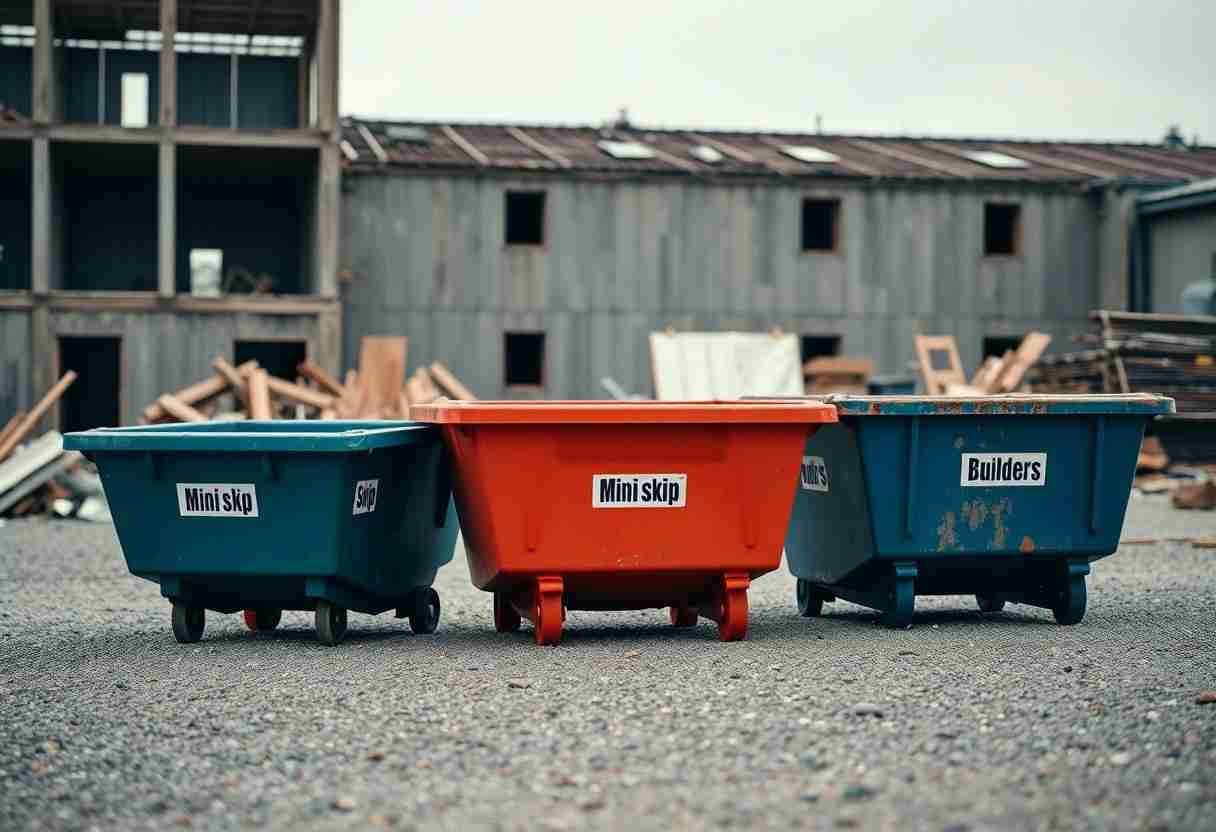
Comparison of Skip Sizes
| Skip Size | Capacity (Cubic Yards) |
|---|---|
| Mini Skip | 2 - 3 |
| Midi Skip | 4 - 5 |
| Builder's Skip | 6 - 8 |
| Large Skip | 10 - 12 |
| Roll-on Roll-off (RoRo) Skip | 15 - 40 |
Size and Capacity Breakdown
Your choice of skip size is contingent upon the volume of waste you need to dispose of. Mini skips, ideal for small renovations or garden clearances, accommodate 2 to 3 cubic yards. Midi skips are a step up, supporting mid-sized projects like bathroom renovations. Builders skips, ranging from 6 to 8 cubic yards, cater to heavier rubble and construction debris. For substantial clear-outs or commercial projects, large skips and RoRo skips handle significant capacities, efficiently managing large volumes of waste.
Cost Implications
The cost of hiring a skip varies according to its size, with larger skips often representing a greater investment. For instance, mini skips can start from around £80, while builder's skips may range from £150 to £250 depending on your location and type of waste. This means your project budget should accommodate not only the hire fee but also potential tipping charges, which apply for specific waste types.
For example, a mini skip may seem economical, costing around £80, but if you underestimate your needs and require multiple trips, expenses may quickly accumulate. In contrast, although a builder's skip costs more upfront, its larger capacity can save you money in the long run, as it may only require a single hire. Always evaluate your project's waste requirements thoroughly to avoid exceeding your budget.
How to Choose the Right Skip Size
Selecting the appropriate skip size can significantly influence the efficiency and cost-effectiveness of your project. Assess the volume of waste you anticipate generating, keeping in mind that overfilling a skip can lead to extra charges. Understanding your project type—whether it's a home renovation, garden clearance, or construction—helps you gauge your skip size needs accurately.
Factors to Consider
When determining the suitable skip size, consider the following factors:
- Type of waste - Some materials may require specific handling.
- Volume of waste - Estimate the total amount for the project.
- Location - Space constraints may limit your options.
- Duration - The project length may influence skip size needs.
Assume that you account for all these aspects to avoid complications during disposal.
Expert Recommendations
Consulting with skip hire professionals can provide invaluable insights into your specific requirements. Generally, for small home projects, a mini skip or midi skip suffices, while larger undertakings may call for a builder's skip or even larger. Industry guidelines suggest allowing for 10-15% extra capacity beyond your initial estimate to accommodate unexpected waste.
Experts often advise opting for a larger skip if you're undecided, as it can save you the hassle of a second hire. For instance, a common guideline is that a six-yard skip typically handles a moderate household clearance. In complex cases, a consultation with a waste management company can provide tailored recommendations based on your unique project requirements, ensuring you don't incur excess costs or logistical challenges.
To wrap up
Upon reflecting, understanding skip sizes from mini to builder's skips empowers you to make informed decisions for your waste disposal needs. Each size serves a specific purpose, catering to varying volumes of waste generated by your projects. By assessing the scale of your requirements, you can select the appropriate skip, ensuring efficient management of your debris while optimising space and cost. Familiarity with these sizes enhances your ability to streamline your projects and maintain a tidy environment.
FAQ
Q: What are the different skip sizes available?
A: Skips come in various sizes to accommodate different waste disposal needs. The common sizes include mini skips (2 cubic yards), midi skips (4 cubic yards), and builder's skips (6 to 8 cubic yards). Larger options, such as roll-on roll-off skips, can hold up to 40 cubic yards, suitable for significant commercial projects.
Q: How do I choose the right skip size for my project?
A: To select the appropriate skip size, assess the amount and type of waste you need to dispose of. For small home clearances, a mini skip may suffice, while renovations or larger cleanouts might require midi or builder's skips. Consider the volume of waste and any space restrictions when making your choice.
Q: Are there any restrictions on what can go in a skip?
A: Yes, certain materials cannot be placed in skips due to legal regulations. Hazardous waste, such as chemicals, asbestos, and electrical items, require special disposal methods. Ensure to check with the skip hire company for specific guidelines on prohibited items to avoid additional charges or fines.